
Balsamic Glazed Chicken and Veggies is a quick weeknight favorite that delivers juicy chicken, crisp vegetables, and a sweet‑tangy glaze without fuss. The combination of grape juice and Dijon mustard creates a glossy coating that caramelizes in the oven, while the veggies stay vibrant and tender. I love how the aroma fills the kitchen, signaling a dinner that’s both wholesome and satisfying. Serve it with quinoa or crusty bread for extra texture and a complete meal.
Table of Contents
Why You’ll Love This Balsamic Glazed Chicken and Veggies
There are several reasons this dish becomes a staple in any household. First, the flavor profile balances sweet and tangy notes, making the chicken taste richer without any heavy sauces. Second, the one‑pan method reduces cleanup, a major benefit after a long day. Third, the colorful vegetables add nutrition and visual appeal, encouraging even picky eaters to enjoy their greens. Finally, the recipe is adaptable; you can swap in seasonal produce or adjust the glaze sweetness to match personal taste.
Another appealing aspect is the time efficiency. With a prep time of just ten minutes and a cooking time of thirty minutes, the entire meal is ready in forty minutes. This fits perfectly into busy schedules, whether you’re juggling work, school, or family commitments. The glaze also doubles as a sauce you can drizzle over leftovers, extending the dish’s usefulness throughout the week.
Equipment You’ll Need
Having the right tools makes the process smoother. You’ll need a large sheet pan or a rimmed baking sheet, a mixing bowl for the glaze, a whisk or fork to combine ingredients, and a sturdy spatula to turn the chicken if desired. An instant‑read thermometer is handy for checking that the chicken reaches an internal temperature of 165°F, ensuring safety without overcooking. Finally, a kitchen timer helps you keep the roasting window precise, preventing the glaze from burning.
- Sheet pan or rimmed baking sheet
- Mixing bowl
- Whisk or fork
- Spatula
- Instant‑read thermometer
- Kitchen timer
Ingredients for Balsamic Glazed Chicken and Veggies
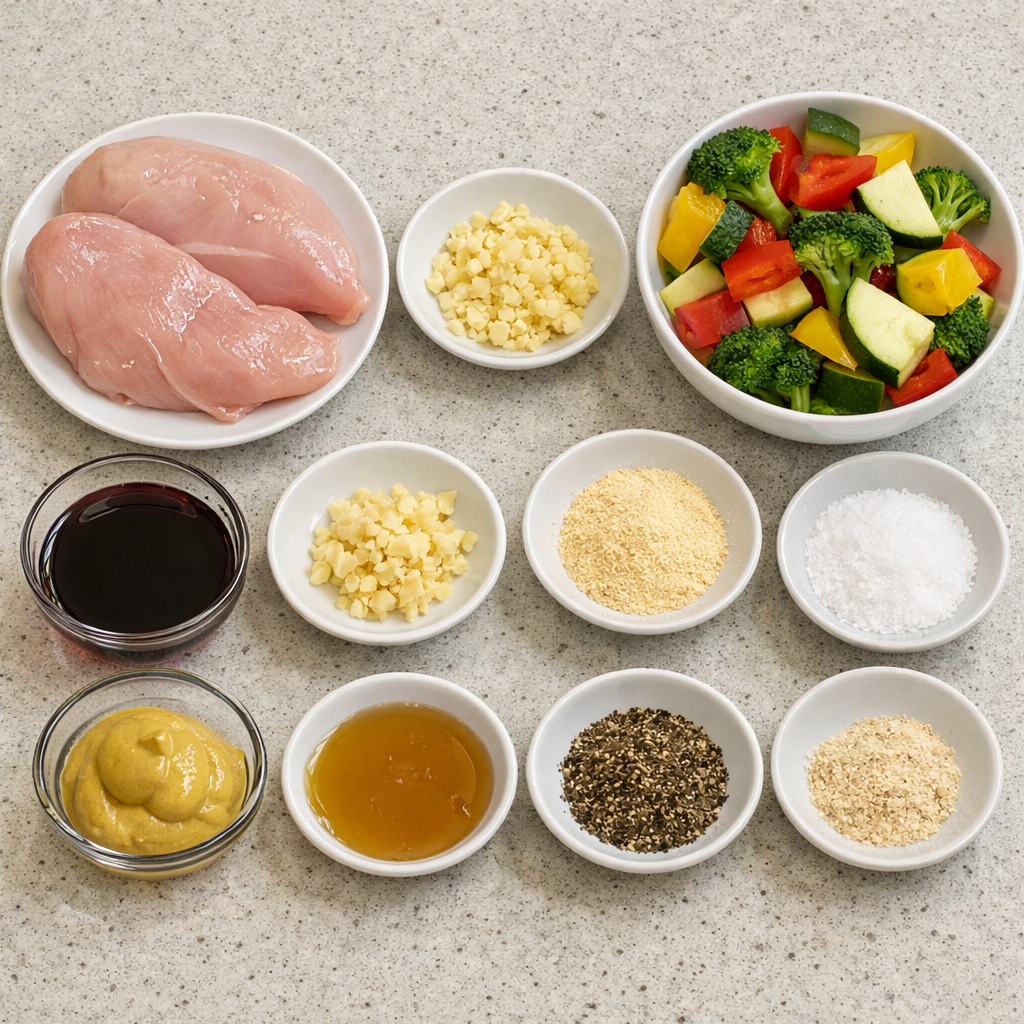
Gather the following ingredients before you start. Using fresh, high‑quality items will elevate the final result.
- 2 chicken breasts, boneless skinless
- 2 cloves garlic, minced
- 1/2 tsp garlic powder
- 2 cups assorted vegetables (bell peppers, zucchini, broccoli)
- 1/4 cup grape juice
- 1 tsp Dijon mustard
- 1 tbsp honey (or maple syrup)
- 1/2 tsp black pepper
- 1/2 tsp Italian seasoning
- 1/2 tsp salt
Ingredient Substitutions
If you need to adjust the recipe, consider these alternatives. Swap honey for a natural sweetener like agave nectar, or replace the vegetables with any seasonal produce you have on hand. The glaze works equally well with a splash of apple cider vinegar for extra tang, though the grape juice already provides the desired acidity.
How to Make Balsamic Glazed Chicken and Veggies (Step‑by‑Step)
Step 1: Preheat the Oven
Set your oven to 400°F (200°C). A hot oven ensures the glaze caramelizes quickly, creating a glossy finish while keeping the chicken juicy.
Step 2: Prepare the Glaze
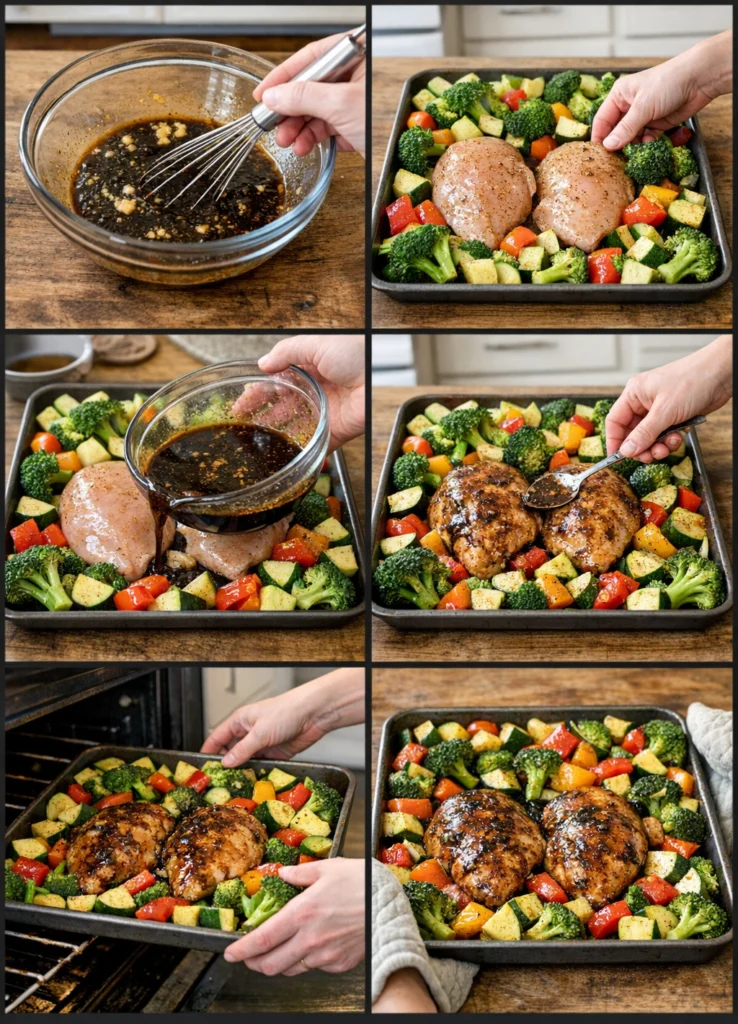
In a mixing bowl, whisk together grape juice, Dijon mustard, honey, minced garlic, garlic powder, black pepper, Italian seasoning, and salt. The mixture should be smooth and slightly thick.
Step 3: Arrange Chicken and Vegetables
Place the chicken breasts on the sheet pan, spacing them evenly. Scatter the assorted vegetables around the chicken, making sure each piece has a bit of space for even roasting.
Step 4: Apply the Glaze
Pour the glaze over the chicken and vegetables, using a spatula to coat everything evenly. The glaze should cling to the surface, creating a thin sheen.
Step 5: Roast
Insert the pan into the preheated oven. Roast for 25‑30 minutes, or until the chicken reaches an internal temperature of 165°F and the vegetables are tender yet slightly crisp.
Step 6: Rest and Serve
Remove the pan from the oven and let the chicken rest for five minutes. This allows the juices to redistribute, keeping the meat moist. Serve the chicken sliced alongside the roasted vegetables, drizzling any remaining glaze over the top.
Variations and Twists
Feel free to experiment with this base recipe. For a spicier version, add a pinch of red pepper flakes to the glaze. If you prefer a smoky flavor, incorporate a teaspoon of smoked paprika into the seasoning blend. To make the dish lower in sugar, reduce the honey or replace it with a sugar‑free syrup. You can also turn this into a vegetarian meal by substituting the chicken with firm tofu cubes that have been pressed and marinated in the same glaze.
What to Serve With Balsamic Glazed Chicken and Veggies
Complement the main dish with simple sides that enhance the overall meal. A serving of quinoa or brown rice provides a hearty grain base that absorbs the extra glaze. Warm crusty bread or garlic‑buttered rolls are perfect for sopping up any remaining sauce. For a refreshing contrast, consider a light mixed green salad dressed with olive oil and lemon juice. If you enjoy a beverage pairing, a crisp sparkling water with a splash of citrus balances the sweet‑tangy notes of the glaze.
Pro Tips for Perfect Results
- Pat the chicken dry before applying the glaze; excess moisture can prevent caramelization.
- Use a high‑quality grape juice with natural sweetness; it creates a richer glaze than diluted versions.
- Don’t overcrowd the pan; give the vegetables room to roast rather than steam.
- Flip the chicken halfway through cooking for an even coat and to avoid burning the glaze on one side.
- Let the chicken rest after roasting; this keeps it juicy and makes slicing easier.

Common Mistakes to Avoid
- Skipping the preheat: a cold oven delays caramelization and can result in soggy glaze.
- Using too much honey: excess sweetness can cause the glaze to burn before the chicken is done.
- Overcrowding the pan: vegetables will steam instead of roast, losing their crisp texture.
- Neglecting to check internal temperature: undercooked chicken poses a food safety risk.
- Leaving the glaze on too long after removal: the residual heat can continue cooking the glaze, making it overly thick.
Storage, Reheating & Make‑Ahead Tips
Store leftovers in an airtight container in the refrigerator for up to three days. Reheat gently in a preheated oven at 350°F for about 10 minutes, or microwave on medium power, covering the dish to retain moisture. The glaze may thicken when cooled; stir in a splash of grape juice or water before reheating to restore its glossy consistency. For meal‑prep enthusiasts, portion the chicken and vegetables into individual containers, keeping the glaze separate until reheating to maintain texture.
Frequently Asked Questions
Can I use chicken thighs instead of breasts? Yes, bone‑in or boneless thighs work well; just increase the cooking time by about five minutes.
What if I don’t have Dijon mustard? Substitute with whole‑grain mustard or a mild yellow mustard; the flavor will be slightly different but still tasty.
Is it possible to make this recipe gluten‑free? Absolutely—ensure your mustard and any added sauces are certified gluten‑free, and serve with gluten‑free grains.
How do I prevent the glaze from burning? Keep an eye on the oven during the last ten minutes and lower the temperature to 375°F if the glaze darkens too quickly.
Can I add other vegetables? Feel free to include carrots, asparagus, or cauliflower; just cut them into similar-sized pieces for even cooking.

Conclusion
In summary, Balsamic Glazed Chicken and Veggies offers a harmonious blend of flavor, nutrition, and convenience. With minimal prep, a single pan, and a delicious glaze, this recipe fits seamlessly into busy lifestyles while still delivering a restaurant‑quality experience. Give it a try tonight and discover why it quickly becomes a family favorite.
Print
Balsamic Glazed Chicken and Veggies: Easy 4-Serving Weeknight Dinner
- Total Time: 40 mins
- Yield: 4 servings 1x
- Diet: Balanced
Description
Enjoy a quick, flavorful weeknight dinner with Balsamic Glazed Chicken and Veggies, featuring tender chicken breasts alongside a rainbow of bell peppers, zucchini, and broccoli. A sweet‑tangy glaze of grape juice, Dijon mustard, and honey coats everything, caramelizing in the oven for a glossy finish while the vegetables stay crisp. Ready in 40 minutes, this balanced meal delivers protein, veggies, and a delicious glaze that kids love, making it an ideal go‑to recipe for busy families now! :).
Ingredients
-
- 2 chicken breasts
- boneless skinless
- 2 cloves garlic
- minced
- 1/2 tsp garlic powder
- 2 cups assorted vegetables (bell peppers
- zucchini
- broccoli)
- 1/4 cup grape juice
- 1 tsp Dijon mustard
- 1 tbsp honey
- 1/2 tsp black pepper
- 1/2 tsp Italian seasoning
- 1/2 tsp salt
Instructions
-
- Preheat the Oven
Set the oven to 400°F (200°C) and let it fully preheat.
- Make the Glaze
Whisk together grape juice, Dijon mustard, honey, minced garlic, garlic powder, black pepper, Italian seasoning, and salt until smooth.
- Arrange Chicken and Veggies
Place the chicken breasts on a sheet pan and spread the vegetables around them.
- Coat with Glaze
Pour the glaze over the chicken and vegetables, ensuring an even coating.
- Roast
Roast for 25‑30 minutes, or until the chicken reaches 165°F and the vegetables are tender.
- Rest and Serve
Let the chicken rest for five minutes, then serve with the roasted vegetables.
Notes
- For extra crispness
- broil the dish for the last 2 minutes. Adjust honey to taste for less sweetness.
- Prep Time: 10 mins
- Cook Time: 30 mins
- Category: Easy
- Method: Baking
- Cuisine: American
Nutrition
- Serving Size: 1 chicken breast with vegetables
- Calories: 320
- Sugar: 12g
- Sodium: 480mg
- Fat: 8g
- Saturated Fat: 2g
- Unsaturated Fat: 4g
- Trans Fat: 0g
- Carbohydrates: 22g
- Fiber: 4g
- Protein: 35g
- Cholesterol: 90mg
Keywords: Balsamic Glazed Chicken and Veggies, easy chicken dinner, balsamic chicken recipe, quick weeknight meals, healthy chicken and veggies, one pan chicken dinner, family friendly chicken recipes, low carb chicken meals