
Homemade Caesar Salad Dressing is a quick, creamy classic that elevates any salad with its rich, tangy flavor, and you can whip it up in just minutes using pantry staples you already have on hand. This guide walks you through every detail, from selecting the perfect mayonnaise to balancing lemon juice and Worcestershire sauce, ensuring a smooth texture and authentic taste. Whether you’re feeding a family dinner or prepping lunchbox meals, this dressing delivers restaurant‑quality results without the hassle of store‑bought versions. Enjoy the smooth tangy taste that makes every bite unforgettable.
Table of Contents
Why You’ll Love This Homemade Caesar Salad Dressing
This dressing captures the iconic flavor profile that made the Caesar salad a staple in restaurants worldwide. The combination of creamy mayonnaise, sharp Dijon mustard, bright lemon juice, and savory Worcestershire sauce creates a balanced tanginess that clings perfectly to crisp romaine leaves. Because it’s made from scratch, you control the amount of salt and can avoid the hidden sugars and preservatives often found in store‑bought versions.
Another reason cooks and home chefs adore this recipe is its speed. In under ten minutes you have a finished dressing that can be used not only on salads but also as a dip for vegetables, a spread for sandwiches, or a topping for grilled chicken. The recipe is forgiving, allowing small adjustments to suit personal taste without compromising the classic character of a Caesar dressing.
Equipment You’ll Need
Having the right tools makes the process smoother and ensures a uniform texture. You don’t need any specialized kitchen gadgets; a few common items are sufficient.
- Medium mixing bowl – for combining the ingredients.
- Whisk or fork – to emulsify the mayonnaise and other liquids.
- Measuring cups and spoons – for precise ingredient amounts.
- Garlic press (optional) – for finely mincing the garlic.
- Microplane or fine grater – for fresh Parmesan cheese.
Ingredients for Homemade Caesar Salad Dressing
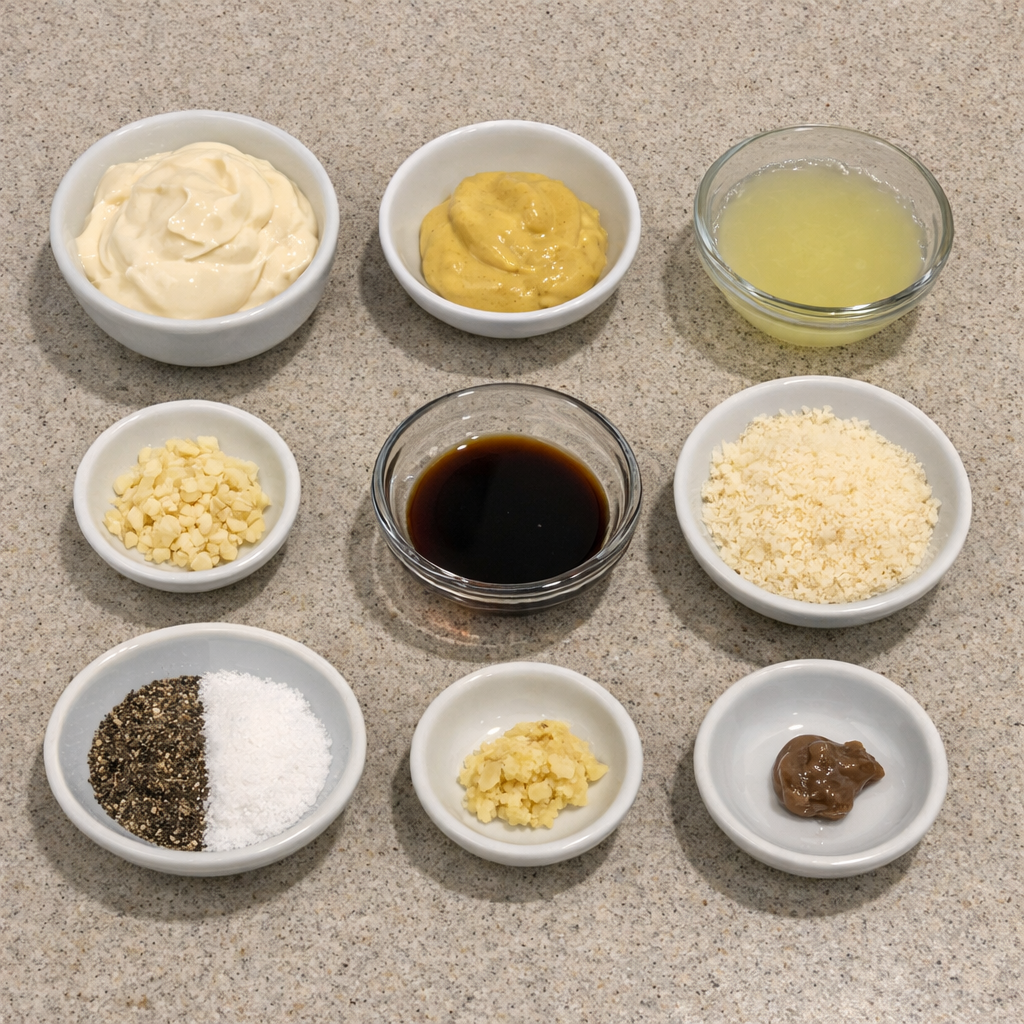
The ingredient list is short, economical, and relies on items most kitchens already have. Each component contributes to the depth of flavor that defines a Caesar dressing.
- 1 cup mayonnaise
- 2 tablespoons Dijon mustard
- 2 tablespoons fresh lemon juice
- 1 teaspoon Worcestershire sauce
- 1 clove garlic, minced
- 1/4 cup grated Parmesan cheese
- Salt and pepper to taste
- 1 teaspoon anchovy paste (optional)
Ingredient Substitutions
If you lack a specific item, simple swaps keep the flavor profile intact. Use a high‑quality grain‑based mustard instead of Dijon for a milder bite, or replace Worcestershire sauce with a splash of soy sauce for a gluten‑free version. Anchovy paste can be omitted for a vegetarian‑friendly option, though the umami depth will be slightly reduced.
How to Make Homemade Caesar Salad Dressing (Step-by-Step)
Step 1: Combine the Base Ingredients
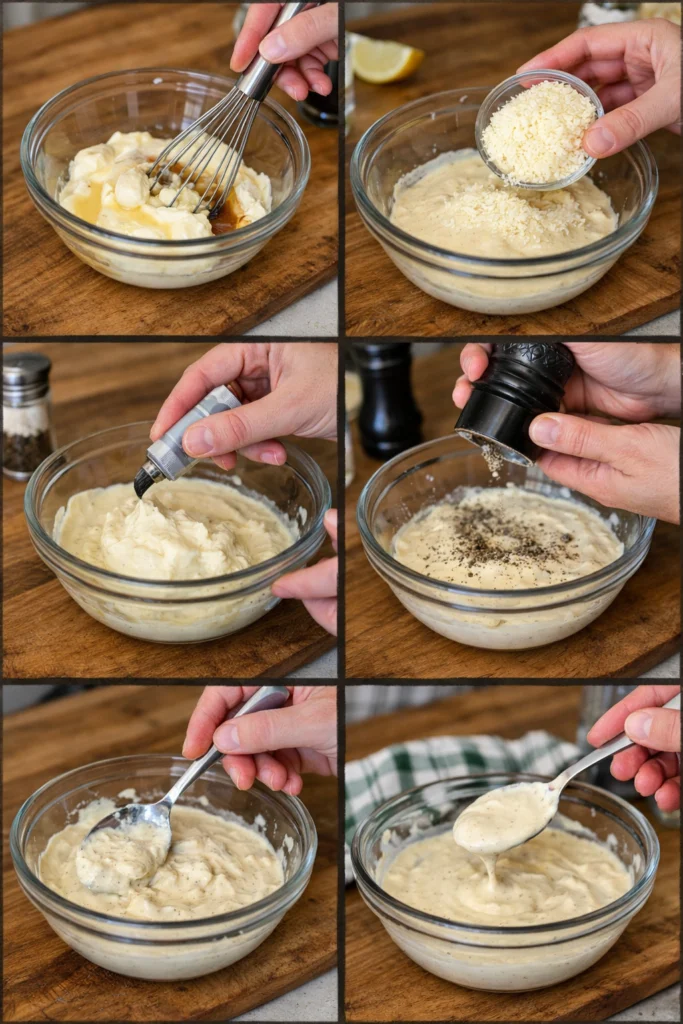
In a medium bowl, add the mayonnaise, Dijon mustard, fresh lemon juice, and Worcestershire sauce. Whisk vigorously until the mixture appears smooth and uniform. This creates the creamy foundation that will carry the other flavors.
Step 2: Incorporate Garlic and Parmesan
Add the minced garlic and freshly grated Parmesan cheese to the bowl. Stir gently, allowing the cheese to melt slightly into the mixture, which adds richness and a nutty undertone.
Step 3: Adjust Seasonings
Season with salt and freshly ground black pepper to taste. If you enjoy a deeper umami flavor, stir in the optional anchovy paste at this stage. Taste the dressing and make any final adjustments—perhaps a few more drops of lemon juice for brightness or a pinch more cheese for thickness.
Step 4: Final Emulsion
Give the dressing one last vigorous whisk to ensure everything is fully emulsified. The texture should be thick yet pourable, coating the back of a spoon without clumping.
Step 5: Serve or Store
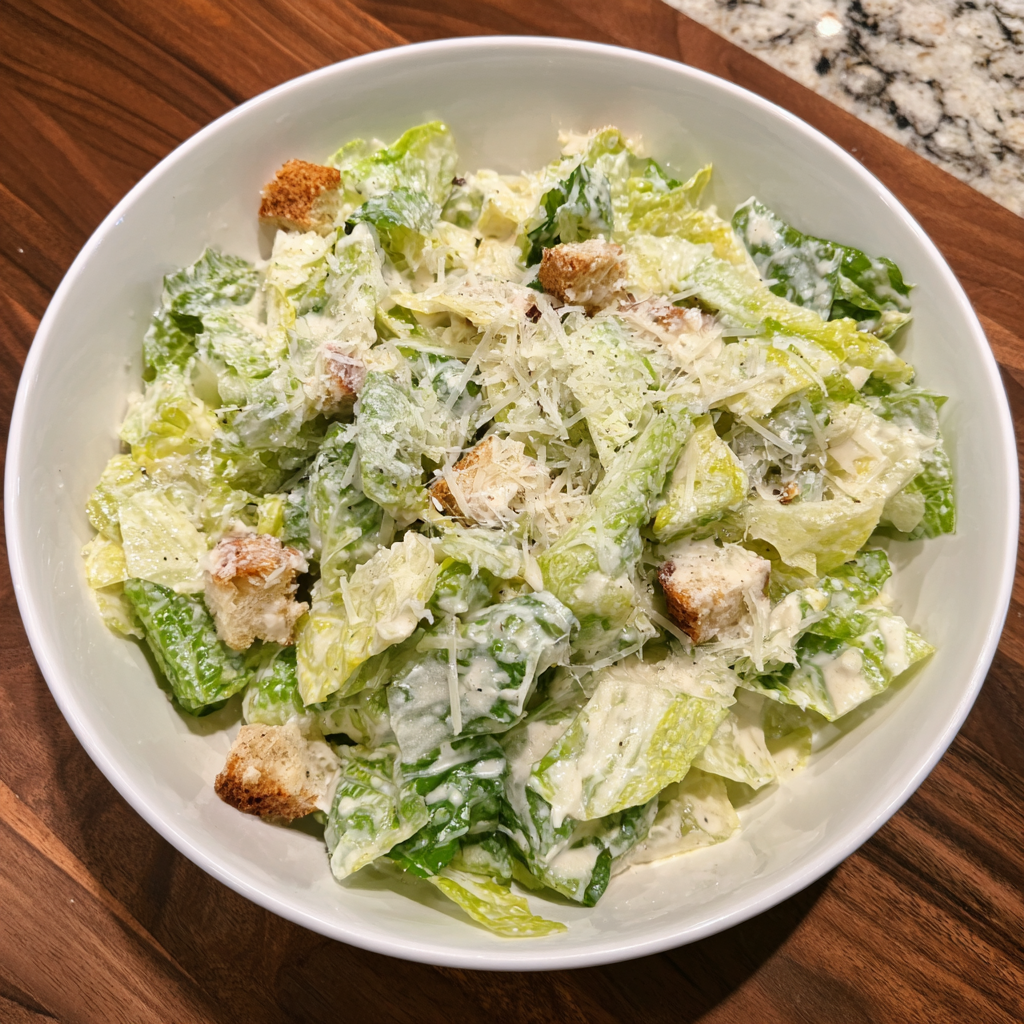
Use the dressing immediately on a crisp Caesar salad, or transfer it to an airtight container and refrigerate. It will keep fresh for up to one week, allowing you to enjoy the flavor on multiple meals.
Variations and Twists
Once you master the classic version, experiment with different flavor directions. Add a teaspoon of smoked paprika for a subtle smoky note, or blend in a tablespoon of Greek yogurt for a lighter texture. For a spicy kick, incorporate a pinch of cayenne pepper or a few drops of hot sauce. If you prefer a dairy‑free alternative, substitute the Parmesan with nutritional yeast, though the texture will be slightly different.
What to Serve With Homemade Caesar Salad Dressing
The versatility of this dressing extends far beyond the traditional romaine Caesar. Pair it with grilled chicken or shrimp for a protein‑rich entrée. Drizzle over roasted vegetables such as asparagus, Brussels sprouts, or cauliflower for a quick side dish. Use as a dip for crunchy raw vegetables like carrot sticks, celery, or bell pepper strips. It also works wonderfully as a spread on toasted baguette slices, turning them into elegant crostini for appetizers.
Pro Tips for Perfect Results
- Use freshly grated Parmesan rather than pre‑shredded cheese; the fresh cheese melts better and provides a richer flavor.
- Allow the garlic to sit for a minute after mincing before adding it; this releases more aroma.
- Adjust the lemon juice gradually—too much can make the dressing overly acidic.
- For a smoother texture, blend the dressing in a food processor for a few seconds after adding all ingredients.
- Store the dressing in a glass jar with a tight‑fitting lid to preserve its freshness and prevent odor transfer.
Common Mistakes to Avoid
- Over‑mixing the dressing can cause the mayonnaise to break, resulting in a watery consistency.
- Using low‑quality mayonnaise can lead to a bland or greasy final product; opt for a premium brand.
- Adding too much salt early on—taste before final seasoning to avoid an overly salty dressing.
- Skipping the anchovy paste if you desire the authentic umami depth; the paste is key to a true Caesar flavor.
- Storing the dressing uncovered, which can cause it to absorb refrigerator odors and dry out.
Storage, Reheating & Make‑Ahead Tips
Transfer the finished dressing to a clean, airtight container and refrigerate. It stays fresh for up to seven days. Before each use, give the jar a good shake or stir with a spoon to re‑emulsify any settled ingredients. The dressing does not require reheating; if you prefer a slightly warm version for drizzling over hot vegetables, gently warm it in a saucepan over low heat, stirring constantly to avoid separation.
Frequently Asked Questions
Can I make this dressing without anchovy paste? Yes, the anchovy paste is optional. Omitting it will reduce the umami depth, but the dressing will still taste delicious thanks to the Parmesan and Worcestershire sauce.
How long does the dressing keep in the fridge? Stored in a sealed container, it remains safe and flavorful for up to one week.
Is this dressing suitable for a low‑carb diet? With only 2 grams of carbohydrates per serving, it fits well within most low‑carb eating plans.
Can I freeze the dressing? Freezing is not recommended because the mayonnaise may separate upon thawing, affecting texture.
Conclusion
With just a handful of pantry staples and ten minutes of your time, you can create a truly restaurant‑quality Caesar dressing that outshines store‑bought alternatives. Use the tips, variations, and storage advice provided to keep your salads vibrant and your meals flavorful every day.
Print
Homemade Caesar Salad Dressing Recipe – Easy, Creamy, and Perfect Every Time
- Total Time: 10 minutes
- Yield: 8 servings 1x
- Diet: Vegetarian
Description
This Homemade Caesar Salad Dressing recipe delivers a silky, creamy texture and bold, tangy flavor using simple pantry staples. Combine mayonnaise, Dijon mustard, fresh lemon juice, Worcestershire sauce, minced garlic, and grated Parmesan for a classic dressing that outshines store‑bought versions. Perfect for tossing crisp romaine, drizzling over grilled vegetables, or serving as a dip, this quick 10‑minute recipe makes everyday meals taste restaurant‑grade.
Ingredients
- 1 cup mayonnaise
- 2 tablespoons Dijon mustard
- 2 tablespoons fresh lemon juice
- 1 teaspoon Worcestershire sauce
- 1 clove garlic, minced
- 1/4 cup grated Parmesan cheese
- Salt and pepper to taste
- 1 teaspoon anchovy paste (optional)
Instructions
- In a bowl, combine mayonnaise, Dijon mustard, lemon juice, Worcestershire sauce, and minced garlic. Mix until smooth.
- Stir in grated Parmesan cheese and season with salt and pepper. Add anchovy paste if using.
- Adjust seasoning as needed and serve immediately or refrigerate for up to a week.
Notes
- Use freshly grated Parmesan for best flavor. Adjust lemon juice for desired acidity. Store in an airtight container in the refrigerator.
- Prep Time: 10 minutes
- Cook Time: 0 minutes
- Category: Salad Dressing
- Method: No-cook
- Cuisine: American
Nutrition
- Serving Size: 2 tbsp
- Calories: 150
- Sugar: 1g
- Sodium: 250mg
- Fat: 13g
- Saturated Fat: 2g
- Unsaturated Fat: 10g
- Trans Fat: 0g
- Carbohydrates: 2g
- Fiber: 0g
- Protein: 2g
- Cholesterol: 5mg
Keywords: Homemade Caesar Salad Dressing, Caesar dressing recipe, homemade salad dressing, easy Caesar dressing, creamy dressing recipe, how to make Caesar dressing, quick salad dressing, best Caesar dressing, classic Caesar dressing, simple dressing recipe, pantry Caesar dressing